


Makeup can look “good” with almost any tool. But when you want perfection: smooth base, seamless edges, skin that still looks like skin then brushes stop being optional and start being strategy. The right makeup brushes don’t just apply product. They prevent patchiness. They soften harsh lines and keep your foundation from sitting on skin like oil floats on water.
If you’re building a kit from scratch or upgrading from the “free-with-purchase” era, thisblog will be really helpful for you because we will recommend a smart, focused set of essential brushes that covers 95% of real-life makeup.
Brushes are the difference between placing makeup and sculpting it. The best formulas in the world still need the right delivery system. A brush that’s too stiff can drag product across your skin and create streaks. Too floppy, and it smears pigment everywhere except where you want it.
Better blending, less panic
Good brushes blur and blend edges until nobody can tell where foundation ends and blush begins. Bad brushes expose every transition resulting in a mismatched look where the facial makeup is does not have a uniform appearance. To remedy it, you compensate. More product. More layers. More effort. That’s how makeup gets heavy.
Buy Premium Makeup Brushes Today
Coverage with control
Coverage isn’t just “full” or “sheer.” It’s how evenly product spreads, how it sits, and whether it breaks apart around the nose and mouth. Brush shape and density decide how much product hits the skin at once. That one detail can rescue you from cakiness.
Skin health and hygiene
Dirty, scratchy, shedding brushes can irritate skin and sabotage it over time. They can also move oils and bacteria around your face, which is a fast track to clogged pores and random breakouts in the exact place you don’t want them.
Professional tools vs basic applicators
A basic sponge-tip applicator or flimsy brush can deposit color, sure. But professional-grade tools are engineered for flawless results that can be replicated again and again. They deliver consistent pressure, consistent powder distribution, and a smooth finish. You’re not just paying for softness. You’re buying predictability.
Face brushes build your base. They set the tone for everything else. If your base is smooth, the rest becomes easy. If your base is messy, every step feels like damage control.
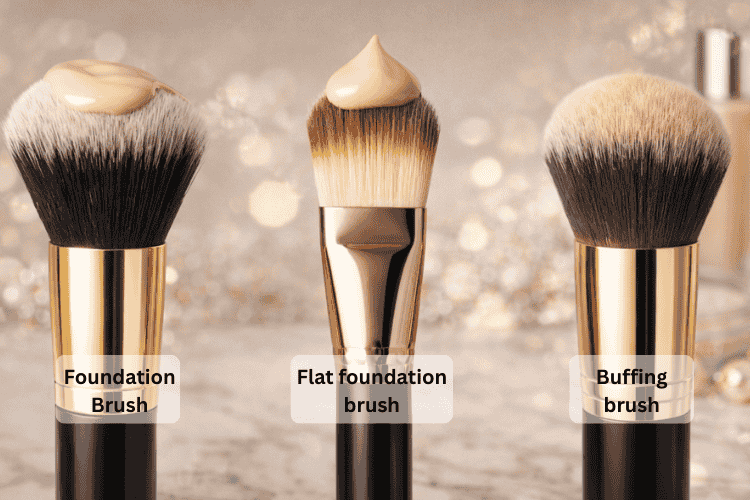
Foundation Brush
Foundation brushes come in a few basic styles and each one creates a different finish. Your choice of brush should be based on the makeup formula you wear frequently and the makeup look you want for the occasion.
Flat foundation brush
Flat brushes paint foundation on in a more direct way. They’re useful for fuller coverage and for placing product exactly where you want it. The risk is streaking if you don’t finish with a buffing motion or a second tool. If you like a polished, perfected base, this brush can deliver that but it requires the user to use it aggressively and greater pressure.
Buffing brush
A dense, rounded buffing brush is the “make it look like skin” tool. It presses and micro-blends product into the surface so foundation looks fused. It’s especially strong with liquid and cream foundations that need to be worked in. This is the brush that can take a foundation you “kind of regret” and make it behave.
Stippling brush
Stippling brushes use dual fiber bristles to lay down powder or liquid foundation lightly and build gradually. Their specialty is in applying makeup with a soft-focus finish without heavy coverage. Think: fresh skin, not mask. They can also help keep dewy foundations from turning greasy too fast. This is because they don’t overapply the foundation in one coat of application
Concealer Brush
Concealer is where good technique becomes vital if you want a fantastic result. This brush highlights makeup mistakes since this brush is used for making creases and sharpen the makeup. And small mistakes in application become glaringly obvious.
A small, tapered concealer brush lets you place product with precision around the inner corner, and under-eye hollow. It’s also excellent for spot concealing because it deposits pigment without spreading it too wide. That matters when you’re covering redness and you don’t want to disturb the foundation around it.
For under-eyes, use gentle pressure and short strokes. Don’t scrub. Your goal is to melt the concealer into the skin, not chase it around.
Powder Brush
Powder should set your makeup, not bury it. A large, fluffy powder brush distributes product in a fine layer. You can set the T-zone and under-eye without creating a dry, dusty finish. If your powder brush is too dense, it can pack powder on and amplify texture. If it’s too small, you’ll keep going back for more, and suddenly you’re over-powdered.
Expert application consists of pressing lightly where you crease is. then sweep away the excess. It’s a quiet step. It’s also a powerful one.
Blush Brush
Blush brings color to any type pf makeup style. But apply too much and the cheeks start looking like a clown. This usually happens if the brush is wrong.
A blush brush should have enough density to place pigment, but enough softness to diffuse it. A slightly tapered or rounded shape gives you control over placement, especially on the apples and along the cheekbone. If you love intense blush, you still want a brush that can soften edges. Bright color with blurred borders looks modern and intentional.
Contour and Bronzer Brush
Contour and bronzer are not the same job in makeup application, and so the brushes used should also be specialized for each type. But you can choose a shape that does both well if you want a streamlined kit.
An angled brush closely wipes the cheekbones and jawlines. It creates clean structure without harsh stripes. A tapered brush gives more precision for the hollows of the cheeks and sides of the nose area. For bronzer, a slightly larger, softer brush prevents thick application and makes it look that the bronzer’s glow is coming from the skin.
If there’s one rule here, it’s this: build slowly. A good brush helps you stop before you go too far. A bad one accelerates regret.
Eyes are small, so your tools need to be smarter. Eye brushes aren’t about volume. They’re about control, placement, and blending that looks effortless even when it wasn’t.
Eyeshadow Flat Brush
A flat shader brush is your pigment delivery system. It packs color onto the lid and lays shimmer down with impact.
If metallic sheen is what you want to create, a slightly firmer flat brush helps press the powder in. But if your makeup style includes the matte shades, a softer flat brush that can still pack color, and blends well is the better choice. That can be useful when you want a lived-in wash instead of a sharp block of color.
Blending Brush
A blending brush is a necessary tool for making the eyeshadow look natural. Choose a fluffy, dome-shaped blending brush for soft transitions and subtle creases that have a natural appeal. It should move color without scraping the skin. The job is to blur edges and create gradient. The brush motion is light. If you only buy one eye brush, make it this one.
Eyeliner Brush
Eyeliner brushes should be thin, and stiff. They need to hold their shape. An angled liner brush works well with a gel liner and for pressing dark shadow along the lash line. It creates a crisp edge without needing a perfectly steady hand. A fine pointed liner brush is better for detailed wings or tightlining with gel. With powder liner, you can dampen the brush slightly for extra intensity and longevity. The goal isn’t thickness. It’s precision.
Essential Lip Brushes
Lip products can look great straight from the bullet. But if you want clean edges, stronger wear, and a professional finish, a lip brush changes the game.
A lip brush lets you place color exactly at the corners, define the cupid’s bow, and control how much product builds in the center. It also helps when you’re mixing shades or using a bold color that needs clean boundaries. And for long wear, it’s excellent: you can press color into the lips in thin layers, which helps it grip.
This is especially valuable with reds, deep berries, and any formula that tends to feather. A lip brush doesn’t just apply. It disciplines the product.
|
Category |
Natural Brushes |
Synthetic Brushes |
Best-fit guidance |
|
Bristle material |
Made from animal hair with a natural cuticle |
Made from man-made fibers (often nylon, taklon, polyester blends) |
Choose based on how you want the brush to pick up and release product |
|
Performance with powders |
Typically excels at picking up and diffusing powder for a soft, airbrushed blend |
Can work well, but some synthetics may deposit powder more directly |
If you mainly wear powder blush/bronzer/setting powder, natural often feels effortlessly “blurred” |
|
Performance with liquids & creams |
Can absorb more product and can sometimes apply less evenly with wet formulas |
Usually ideal: less absorption, smoother control, less streaking |
If you use liquid foundation, cream blush, cream bronzer, synthetic is the easier win |
|
Finish on the skin |
Often creates a more diffused, feathered look |
Often gives a more precise, controlled laydown |
Natural for soft haze; synthetic for clean placement and sharper control |
|
Product waste |
Higher risk of soaking up liquids/creams (more waste) |
Lower product absorption (more product reaches skin) |
If you’re trying to stretch expensive base products, synthetic helps |
|
Durability & washing |
Can last long, but may require gentler washing; can become brittle if over-washed or dried poorly |
Generally, very durable; tolerates frequent washing and dries faster |
If you clean often (or should), synthetic is more forgiving |
|
Cost & value |
Often more expensive at high quality |
Wide range; strong value options available |
Build a budget-friendly starter kit faster with synthetic, then upgrade selectively |
This is where most people overbuy which is a mistake and a wrong approach.
Skill level
Beginner-level makeup specialists and normal people don’t need twenty brushes. They need a small set that meets the basic daily needs. So, search for brushes that blend easily and don’t deposit too aggressively.
Makeup style
If you are a fan of soft glam, focus on getting a great buffing brush, a blush brush, and at least two eye brushes: a flat shader and a blender. If you love sculpted looks, add a more precise contour brush and a reliable concealer brush. If you love bold eyes, get a dedicated liner brush and consider a smaller blending brush for detail work.
Skin type
Dry skin is textured or dry, overly dense brushes can emphasize flakes by pushing product into them. Softer, more flexible brushes often create a smoother finish. If you’re sensitive, prioritize ultra-soft bristles and avoid anything scratchy. Your face should not feel sanded.
Think about the brush purposes, when curating a practical brush set. You want one brush to lay foundation, one to set lightly, one to add color to cheeks, one to define structure, one to pack shadow, one to blend shadow, and one to add precise liner detail. That’s a complete system. Everything else is customization.
Makeup brushes are not accessories. They’re tools that can enhance the makeup gain. The right set sharpens your routine, upgrades your finish, and makes every product you own perform better. Start with a smart lineup of core brushes: foundation, concealer, powder, blush, contour/bronzer. For eye makeup your array should include tight eye lineup for packing, blending, and lining. Choose makeup tools that match the foundation formulas. When your tools cooperate, your makeup stops feeling like work and starts feeling like control.
You can cover a complete routine with a small kit: one foundation brush, one powder brush, one blush brush, one contour/bronzer brush, one flat eyeshadow brush, one blending brush, and one eyeliner brush. That’s enough to create polished, varied looks without drowning in tools.
Not always. Price doesn’t guarantee performance. What matters is bristle softness, density, shape, and how well the brush holds up to washing without shedding or losing structure. Plenty of mid-range brushes perform like luxury if the construction is solid.
You can, but it’s rarely ideal. Creams leave residue that can make powders apply patchy or grabby. If you must double-duty a brush, clean it thoroughly and let it fully dry before switching product types.
Replace a brush when it sheds excessively, feels scratchy, has splayed bristles that won’t reshape after washing, or starts applying makeup unevenly no matter what you do. A good brush should keep its shape and softness over time with proper care.
Makeup can look “good” with almost any tool. But when you want perfection: smooth base, seamless edges, skin that still looks like skin then brushes stop being optional and start being strategy. The right makeup brushes don’t just apply product. They prevent patchiness. They soften harsh lines and keep your foundation from sitting on skin like oil floats on water. If you’re building a kit from scratch or upgrading from the “free-with-purchase” era, thisblog will be really helpful for you because we will recommend a smart, focused set of essential brushes that covers 95% of real-life makeup. Why Choosing the Right Makeup Brushes Is Important Brushes are the difference between placing makeup and sculpting it. The best formulas in the world still need the right delivery system. A brush that’s too stiff can drag product across your skin and create streaks. Too floppy, and it smears pigment everywhere except where you want it. Better blending, less panic Good brushes blur and blend edges until nobody can tell where foundation ends and blush begins. Bad brushes expose every transition resulting in a mismatched look where the facial makeup is does not have a uniform appearance. To remedy it, you compensate. More product. More layers. More effort. That’s how makeup gets heavy. Buy Premium Makeup Brushes Today Coverage with control Coverage isn’t just “full” or “sheer.” It’s how evenly product spreads, how it sits, and whether it breaks apart around the nose and mouth. Brush shape and density decide how much product hits the skin at once. That one detail can rescue you from cakiness. Skin health and hygiene Dirty, scratchy, shedding brushes can irritate skin and sabotage it over time. They can also move oils and bacteria around your face, which is a fast track to clogged pores and random breakouts in the exact place you don’t want them. Professional tools vs basic applicators A basic sponge-tip applicator or flimsy brush can deposit color, sure. But professional-grade tools are engineered for flawless results that can be replicated again and again. They deliver consistent pressure, consistent powder distribution, and a smooth finish. You’re not just paying for softness. You’re buying predictability. Essential Face Makeup Brushes Face brushes build your base. They set the tone for everything else. If your base is smooth, the rest becomes easy. If your base is messy, every step feels like damage control. Foundation Brush Foundation brushes come in a few basic styles and each one creates a different finish. Your choice of brush should be based on the makeup formula you wear frequently and the makeup look you want for the occasion. Flat foundation brush Flat brushes paint foundation on in a more direct way. They’re useful for fuller coverage and for placing product exactly where you want it. The risk is streaking if you don’t finish with a buffing motion or a second tool. If you like a polished, perfected base, this brush can deliver that but it requires the user to use it aggressively and greater pressure. Buffing brush A dense, rounded buffing brush is the “make it look like skin” tool. It presses and micro-blends product into the surface so foundation looks fused. It’s especially strong with liquid and cream foundations that need to be worked in. This is the brush that can take a foundation you “kind of regret” and make it behave. Stippling brush Stippling brushes use dual fiber bristles to lay down powder or liquid foundation lightly and build gradually. Their specialty is in applying makeup with a soft-focus finish without heavy coverage. Think: fresh skin, not mask. They can also help keep dewy foundations from turning greasy too fast. This is because they don’t overapply the foundation in one coat of application Concealer Brush Concealer is where good technique becomes vital if you want a fantastic result. This brush highlights makeup mistakes since this brush is used for making creases and sharpen the makeup. And small mistakes in application become glaringly obvious. A small, tapered concealer brush lets you place product with precision around the inner corner, and under-eye hollow. It’s also excellent for spot concealing because it deposits pigment without spreading it too wide. That matters when you’re covering redness and you don’t want to disturb the foundation around it. For under-eyes, use gentle pressure and short strokes. Don’t scrub. Your goal is to melt the concealer into the skin, not chase it around. Powder Brush Powder should set your makeup, not bury it. A large, fluffy powder brush distributes product in a fine layer. You can set the T-zone and under-eye without creating a dry, dusty finish. If your powder brush is too dense, it can pack powder on and amplify texture. If it’s too small, you’ll keep going back for more, and suddenly you’re over-powdered. Expert application consists of pressing lightly where you crease is. then sweep away the excess. It’s a quiet step. It’s also a powerful one. Blush Brush Blush brings color to any type pf makeup style. But apply too much and the cheeks start looking like a clown. This usually happens if the brush is wrong. A blush brush should have enough density to place pigment, but enough softness to diffuse it. A slightly tapered or rounded shape gives you control over placement, especially on the apples and along the cheekbone. If you love intense blush, you still want a brush that can soften edges. Bright color with blurred borders looks modern and intentional. Contour and Bronzer Brush Contour and bronzer are not the same job in makeup application, and so the brushes used should also be specialized for each type. But you can choose a shape that does both well if you want a streamlined kit. An angled brush closely wipes the cheekbones and jawlines. It creates clean structure without harsh stripes. A tapered brush gives more precision for the hollows of the cheeks and sides of the nose area. For bronzer, a slightly larger, softer brush prevents thick application and makes it look that the bronzer’s glow is coming from the skin. If there’s one rule here, it’s this: build slowly. A good brush helps you stop before you go too far. A bad one accelerates regret. Must Have Eye Makeup Brushes Eyes are small, so your tools need to be smarter. Eye brushes aren’t about volume. They’re about control, placement, and blending that looks effortless even when it wasn’t. Eyeshadow Flat Brush A flat shader brush is your pigment delivery system. It packs color onto the lid and lays shimmer down with impact. If metallic sheen is what you want to create, a slightly firmer flat brush helps press the powder in. But if your makeup style includes the matte shades, a softer flat brush that can still pack color, and blends well is the better choice. That can be useful when you want a lived-in wash instead of a sharp block of color. Blending Brush A blending brush is a necessary tool for making the eyeshadow look natural. Choose a fluffy, dome-shaped blending brush for soft transitions and subtle creases that have a natural appeal. It should move color without scraping the skin. The job is to blur edges and create gradient. The brush motion is light. If you only buy one eye brush, make it this one. Eyeliner Brush Eyeliner brushes should be thin, and stiff. They need to hold their shape. An angled liner brush works well with a gel liner and for pressing dark shadow along the lash line. It creates a crisp edge without needing a perfectly steady hand. A fine pointed liner brush is better for detailed wings or tightlining with gel. With powder liner, you can dampen the brush slightly for extra intensity and longevity. The goal isn’t thickness. It’s precision. Essential Lip Brushes Lip products can look great straight from the bullet. But if you want clean edges, stronger wear, and a professional finish, a lip brush changes the game. A lip brush lets you place color exactly at the corners, define the cupid’s bow, and control how much product builds in the center. It also helps when you’re mixing shades or using a bold color that needs clean boundaries. And for long wear, it’s excellent: you can press color into the lips in thin layers, which helps it grip. This is especially valuable with reds, deep berries, and any formula that tends to feather. A lip brush doesn’t just apply. It disciplines the product. Natural vs Synthetic Makeup Brushes Category Natural Brushes Synthetic Brushes Best-fit guidance Bristle material Made from animal hair with a natural cuticle Made from man-made fibers (often nylon, taklon, polyester blends) Choose based on how you want the brush to pick up and release product Performance with powders Typically excels at picking up and diffusing powder for a soft, airbrushed blend Can work well, but some synthetics may deposit powder more directly If you mainly wear powder blush/bronzer/setting powder, natural often feels effortlessly “blurred” Performance with liquids & creams Can absorb more product and can sometimes apply less evenly with wet formulas Usually ideal: less absorption, smoother control, less streaking If you use liquid foundation, cream blush, cream bronzer, synthetic is the easier win Finish on the skin Often creates a more diffused, feathered look Often gives a more precise, controlled laydown Natural for soft haze; synthetic for clean placement and sharper control Product waste Higher risk of soaking up liquids/creams (more waste) Lower product absorption (more product reaches skin) If you’re trying to stretch expensive base products, synthetic helps Durability & washing Can last long, but may require gentler washing; can become brittle if over-washed or dried poorly Generally, very durable; tolerates frequent washing and dries faster If you clean often (or should), synthetic is more forgiving Cost & value Often more expensive at high quality Wide range; strong value options available Build a budget-friendly starter kit faster with synthetic, then upgrade selectively How to Choose the Best Makeup Brushes for Your Needs This is where most people overbuy which is a mistake and a wrong approach. Skill level Beginner-level makeup specialists and normal people don’t need twenty brushes. They need a small set that meets the basic daily needs. So, search for brushes that blend easily and don’t deposit too aggressively. Makeup style If you are a fan of soft glam, focus on getting a great buffing brush, a blush brush, and at least two eye brushes: a flat shader and a blender. If you love sculpted looks, add a more precise contour brush and a reliable concealer brush. If you love bold eyes, get a dedicated liner brush and consider a smaller blending brush for detail work. Skin type Dry skin is textured or dry, overly dense brushes can emphasize flakes by pushing product into them. Softer, more flexible brushes often create a smoother finish. If you’re sensitive, prioritize ultra-soft bristles and avoid anything scratchy. Your face should not feel sanded. Practical build: the Versatile Kit Think about the brush purposes, when curating a practical brush set. You want one brush to lay foundation, one to set lightly, one to add color to cheeks, one to define structure, one to pack shadow, one to blend shadow, and one to add precise liner detail. That’s a complete system. Everything else is customization. Conclusion Makeup brushes are not accessories. They’re tools that can enhance the makeup gain. The right set sharpens your routine, upgrades your finish, and makes every product you own perform better. Start with a smart lineup of core brushes: foundation, concealer, powder, blush, contour/bronzer. For eye makeup your array should include tight eye lineup for packing, blending, and lining. Choose makeup tools that match the foundation formulas. When your tools cooperate, your makeup stops feeling like work and starts feeling like control. Frequently Asked Questions (FAQ’s) How many makeup brushes do I really need to start? You can cover a complete routine with a small kit: one foundation brush, one powder brush, one blush brush, one contour/bronzer brush, one flat eyeshadow brush, one blending brush, and one eyeliner brush. That’s enough to create polished, varied looks without drowning in tools. Are expensive brushes always better? Not always. Price doesn’t guarantee performance. What matters is bristle softness, density, shape, and how well the brush holds up to washing without shedding or losing structure. Plenty of mid-range brushes perform like luxury if the construction is solid. Can I use the same brush for cream and powder products? You can, but it’s rarely ideal. Creams leave residue that can make powders apply patchy or grabby. If you must double-duty a brush, clean it thoroughly and let it fully dry before switching product types. How do I know when it’s time to replace a brush? Replace a brush when it sheds excessively, feels scratchy, has splayed bristles that won’t reshape after washing, or starts applying makeup unevenly no matter what you do. A good brush should keep its shape and softness over time with proper care. Important Resources DivaBeautyChina About DivaBeautyChina Contact DivaBeautyChina Team
READ FULLMakeup brushes are a basic tool without which completing a makeup routine is impossible. Using the right brush is the difference between a makeup that looks incomplete and one that looks complete and genuine. Moreover, having a wide array of brushes can make makeup application much more personalized and adaptable. A lot of makeup styles require specialized brushes and if a makeup set lacks these, then they simply cannot be done. Knowing your brushes and their functions is essential for makeup artists as well as ordinary woman for getting the most out of their makeup sets. Why the Right Makeup Brush Set Matters? Better Precision in Makeup Application The function of each brush in a makeup brush set is specific. Some brushes are great for blending the eyeshadow, while others are more suited for foundation application. Utilizing the right brush prevents faults that typically spoil the makeup look such as incorrect contours and foundation application that looks rough. Smooth Blending Premium quality makeup brushes tend to blend makeup flawlessly giving the he overall makeup a highly refined appearance. This look cannot be accomplished with poor quality makeup tools. Makeup Stays Up for a Longer Time Makeup applied through specialized brushes can last throughout the day and does not fade as easily as that applied by substandard brushes. Skin health Unlike hands that are usually covered with bacteria, brushes are much more sanitary and high-quality brushes can be wiped clean easily. Hence, makeup application by brush is infinitely much more hygienic than applying through hands. Understanding Makeup Brush Types and Sizes There are several types of small brushes that can enhance makeup application accuracy. Small Brushes Concealer Brush: It has a small and flat hair plume and the small size makes it great for applying the powder in small areas under the eyes. It mainly used to apply concealer to hide dark circles. Blending Brush: This is a fluffy dome shaped brush that can blend eyeshadow and is great for flawless eye makeup. Eyeliner Brush: This brush is for applying to the delicate eyelid area. The bristles have an angular arrangement that helps in making accurate lines with gel or powder eyeliner. Brow Brush: This brush also has bristles set in a specific angle. Its purpose is to apply eyebrow makeup and also helps in eyebrow grooming. Lip Brush: Lip makeup has a huge impact on the overall makeup as the lips are the most visible part of the face and can be made to stand out with lipstick shades. Here the lip brush becomes really useful as it is used to apply lipstick flawlessly. Medium Brushes Foundation Brush: This brush has closely arranged bristles that are primarily used for an even foundation application. They play a major role in making the face foundation appear as smooth as possible. Contour brush: An angled brush that is used for defining the contours of the face such as the jawline and cheekbones with a powder of a darker shade. The brush makes the face shape appear more defined. Fan Brush: This brush has a special purpose shape that assists in highlighter application. Large Brushes Powder Brush: Some makeup styles require a soft diffused look and the powder brush is able to deliver that by applying loose powder. Blush brush: This is a large, fluffy brush that is used to apply light color. Another version of blush brush has a more tapered bristle arrangement. Both of them come handy in applying blush on the cheeks. Bronzer Brush: Perfect for applying bronzers this particular brush is fluffy and has a wide spread as it is used for a large face coverage area. Foundation Brush Set: For Flawless Makeup Application Your foundation brush is a brush that suits well the most for your skin. Most foundation sets include flat, kabuki, and stippling brushes. Each is crafted for a specific purpose in makeup application. The flat brush is your ultimate solution for liquid foundations as it lays down product evenly and gives that airbrushed, red-carpet base. The kabuki brush, with its dense bristles, is the heavy lifter perfect for buffing foundation into the skin for a seamless, full-coverage look. And the stippling brush? That’s the multitasker, ideal for lightweight formulas and buildable coverage that still lets your skin breathe. Choosing the right foundation brush starts with your skin type. Oily or combination skin? A dense kabuki will help you press the product in without over-layering. Dry or textured skin? A stippling brush gives a softer finish that won’t highlight flaky areas. And if you love precision, the flat foundation brush will always be your clean, controlled canvas starter. Follow the correct application technique. Don’t smear, just buff. Use circular motions for even distribution and blend past your jawline (because no one wants that foundation line betrayal). For a dewy, skin-like glow, lightly mist your brush before application — it helps your product melt right into the skin like it was born there. Eye Makeup Brush Set: Adding a Dramatic Touch Eye brushes are what make a plain makeup look dramatic and attention-grabbing. A comprehensive eye brush set usually includes a blending brush, crease brush, flat shader, and eyeliner brush. Each plays a precise role in crafting that eye look that turns heads. The blending brush maintains a balance as it softens harsh edges and transitions shades. The crease brush brings depth, sculpting definition into the socket for that lifted, pro-level contour. The flat shader brush is your pigment packer; the one that lays down shimmer and color intensity right where you need it. And the eyeliner brush? That’s your fine-tipped weapon for clean lines, smoky wings, and waterline precision. Why are these tools so crucial? Because eye makeup is all about control. The right brushes make blending effortless precision, and natural detailing. Without them, even the most expensive palette won’t save you from muddy color and uneven edges. Face Brush Set: Giving Makeup a Sculpted Appearance Now, let’s talk about the finishing act: your face makeup brush set. This is where dimension, warmth, and glow come alive. A complete face brush lineup includes your powder, blush, contour, and highlighter brushes: each one is responsible for fine-tuning your features into harmony. Your powder brush is the main component of the set and locks in foundation and controls shine of the makeup. The blush brush adds that healthy pop ideally with a soft dome or rounded edge for natural diffusion. The contour brush does the chiselling, and its angled design hugs cheekbones and jawlines with surgical precision. Finally, the highlighter brush brings in the light a tapered, smaller brush that kisses high points for that effortless glow-up. In makeup application, geometry is important and angled vs. round brushes are needed to develop makeup edges. Angled brushes are about structure: think contouring, defining, precision. Round brushes are about softness like blending, buffing, and creating that airbrushed finish. Know when to switch between them, and your face game levels up instantly. To build a flawless base with a face brush set, layering is the right way to accomplish the look. This begins with a powder base application. Then contouring should be done to give shape. After this add some blush. The refinement is achieved by the application. Always blend outward and upward. Makeup Brush Care and Maintenance Let’s get one thing straight: dirty brushes are the silent saboteurs of great skin and flawless makeup. Brushes pick up oil, product residue, and bacteria like magnets. If they are not cleaned on the regular, they’ll start ruining your complexion and the dirt will mix with pigments to spoil the shade. Keeping your brushes clean is therefore not a choice but a necessity. The question is, how often is good enough? Brushes that are dipped in liquid and cream products can become dirty much more quickly, and giving them a deep clean once a week becomes necessary. Powder brushes can function for longer without cleaning and rinsing them once every two weeks does the job. Eye brushes require more care, and you need to clean them after every few uses, especially if you’re switching shades or regularly applying dark pigments. The payoff? Smoother application, truer color payoff, and skin that stays happy. Now, let’s talk about how to actually do the cleaning. • Start by running your brush bristles under lukewarm water. The head of the brush should be downwards. • Next, swirl your brush into a gentle cleansing solution or a mixture of baby shampoo and olive oil. The shampoo breaks down product buildup. The olive oil keeps the bristle soft and silky. • Washing the buildup means massaging the bristles with your fingers or on a silicone brush pad. • Finally, let the brushes dry flat on a towel with the heads hanging off the edge. The surrounding air will quickly airdry them. Drying them upright is a mistake that you will regret because the water will drip down and drain into the ferrule to the place where bristles are glued together, thus weakening the bonding and leading to the bristles falling out. For making the perfect cleaning solution, go for alcohol-free brush shampoos or solid cleansers made for synthetic or natural bristles. A quick-drying spray cleaner also comes in handy between uses if you want to sanitize the brush quickly. For storage, remember that professional makeup brushes are tools that help you deliver flawless makeup so treat them with care. Place them in a holder once they’re dry, away from sunlight and humidity. If you travel, slip them into a ventilated brush case. Do not wrap them in a plastic sleeve and never cram them into drawers as the bristles get bent, which means inaccurate makeup application. Conclusion Investing in a quality brush set is the strategic approach to making makeup application precise. A good set doesn’t just make application easier; it makes the makeup routine much quicker and more efficient. Your foundation glides smoother. Your shadows blend cleaner. Your highlighter lands exactly where it should. You waste less product, save time, and gain confidence in every stroke. It’s the difference between “good makeup” and “who did your makeup?” energy. So, if your brushes are shedding, streaking, or just not delivering that studio-level finish, it’s time. Explore the trending brush sets of 2025, the ones redefining performance, sustainability, and design. From smart fiber technology to ergonomic handles and cruelty-free bristles, these aren’t just upgrades; they’re power moves for your vanity.
READ FULLIt can often be confusing to decide between two makeup tools that appear to serve the same purpose. While both have their advantages, the right choice largely depends on your skill level, skin type, and desired finish. Professional makeup artists usually know which tool to use for a specific effect, but for beginners, the decision can be tricky. Each tool performs best in particular situations, and understanding their unique features can make a big difference. Here’s a simple guide to help you choose wisely. When Should You Use a Makeup Sponge? The correct use of a sponge comes when one needs to blend liquid products. This is where it helps the most. Women who want to adjust their makeup or hide blemishes use sponges. To get a better idea, here are all the applications where women need sponges. Request a Quote for B2B Makeup Sponge Supply Suitable For Liquid and Cream Products When you look for coverage, use a makeup sponge to adjust the liquid foundation. It provides great results since you need dabbing. Sponge is for bouncing and dabbing for the adjustment of liquid foundation and also concealer. The same goes for liquid blush because the sponge provides precise control in its applications. As a result, you will have a natural-looking blush. The foam material helps sponges to control the liquid products on the face because they have an absorption function. This high absorption allows them to provide users with the result they wish for. For Seamless Blending When you want seamless blending, always choose a sponge. It will provide you with smooth and unnoticeable results. The dabbing will blend the excess liquid makeup for the accurate adjustment. As a result, there are no visible lines on the face, and you will get a smooth texture. The blending will only take place when you do sponge bounding and patting until you get the best look. Since sponge is known for these functions, you should go with it when you need seamless blending. To Get an Airbrushed Finish Get an even makeup application like an airbrushed finish through a sponge. Yes, sponge will help you get a sheer and natural appearance because this is where it fits the best. The slow tapping provides makeup adjustment for lightweight makeup and natural looks. For Best Results, Hydrate It Sponge works the best when you hydrate it. Since makeup adjustment requires little tapping, you should make it a little moist. Wash it thoroughly and then remove excess water from it to prevent moisture. Then you will get a smooth texture and finish on the face. It will work well with concealer, cream blush, foundation, and liquid highlighter when it is wet. To Dab Facial Oil Absorb the facial oil on the T section with a sponge because that’s what it is for. It removes the oiliness from the frontal section to provide a smooth appearance. Sponge absorbs the oil pretty well because it works well with liquid products. You can use a dry or mildly wet sponge for facial oil dabbing. It will provide precise facial oil and liquid products’ absorption and a smoother appearance of the face. For Contouring Facial structure’s adjustment or contouring requires frequent dabbing. One needs a high-quality sponge for that. If you want to highlight the facial features by covering the unwanted ones, a sponge will help you do that. You can sculpt the nose, jawline, and other facial sections by using the right sponging technique. To Hide Blemishes and Flaws for Mild Coverage Hiding flaws and blemishes is easy with sponges. All you need to do is use them to adjust the liquid makeup to reduce hyperpigmentation. The blemishes and flaws will start to disappear when you tap the right areas. What you need to do is apply the right shade that matches your skin tone, and adjust it slowly with a sponge. Make sure it is slightly wet to provide you with ideal results in hiding blemishes. Not for Heavy Coverage, Can Absorb Too Much However, it is not for heavy coverage. Since the sponge absorbs the liquid foundation, it will not provide an opaque look. That means you will have to avoid a sponge when going for heavy coverage. Instead, use a brush or puff to build a thicker and more even layer. These tools help distribute the foundation more densely across the skin, ensuring a smooth and flawless appearance. When Should You Use a Makeup Puff? Then comes the makeup puff, which seems similar, but it has different benefits. It works slightly differently, and that’s what you will find below. Makeup puffs are designed for precision and control, especially when applying powder-based products. They help in setting makeup, reducing shine, and creating a flawless matte finish. Unlike sponges that blend liquids, puffs are perfect for pressing and rolling powders into the skin to achieve a smooth and even texture. When Setting Powder-Based Products Whenever you look to adjust powder products, always use a makeup puff. It provides a smooth finish on powder-based products. Get a blurred finish by slowly applying the powder puff on the face. It will absorb oil from the face, and then adjust the powder slowly. As a result, you will get a smooth and balanced texture. Slowly roll the puff because that's what it does best. It is more for pressing and rolling than dabbing. To Blend the Powder Evenly When you roll the puff on the powder makeup, it will create an even layer. That will neither make the makeup too thick nor very unnoticeable. You will get a lightweight and balanced makeup on the face through precise adjustment with a power puff. It helps in pressing the powder products into the skin for precise setting. The flawless makeup look is just the right technique, and puff away. In Baking Technique Get easy baking by using a makeup puff. It will give you a crease-free under-eye area. The bright eye section will come when you use a wet powder puff. Use it to roll slowly until you get the desired results. Get rid of dark circles and inconsistent makeup results by using the baking technique. All you will need is white powder, concealer, and a puff to do this technique. Apply the concealer, then use white powder with a puff to create a thick layer. Leave it for a few minutes, and then remove it with a brush. The results will be amazing. To Balance the Coverage Balancing the coverage is easy with a powder puff. You just need to create thin layers only to adjust them with a puff. Slowly create a blurred look by rolling a puff on the areas where you applied extra makeup. What you will have to do is dab an extra layer on the skin where you need balanced coverage, and then remove the excess layer with a wet puff. To Reduce Excess Layers The same goes for excess layers when you feel cakey. When the face gets excess layers, you will need a powder puff to roll on those excess layers. It will allow you to slowly adjust the makeup until you feel the desired results. For Better Contouring You can also do contouring with puff. Some effects require rolling and swiping with puff. Apply the powder concealer if you want to use a puff. Since puff works best with powder-based makeup, you should go with it. It will help you create sharper and precise features. To Balance the Oil for Matte Finish A puff can help you absorb excess oil if you have oily skin. It will give you a matte finish. Use slow swiping and rolling to get that matte finish. Primer and moisturizer will create a layer on the face, then you can remove excess oil to get a matte finish on the face. Not Ideal for Blending Liquid Products However, it is not ideal for blending liquid products. It can create a patchy texture if you use it incorrectly. So, it is better to avoid it when using liquid makeup. Makeup puff works the best with powder-based makeup, and you should stick to it. Makeup Sponge vs. Makeup Puff: Key Differences Feature Makeup Sponge Makeup Puff Texture Soft and bouncy PU foam Velvety or fabric-based microfiber material Best for Concealer, liquid, and cream products Powder-based productslike loose and pressed powders Finish Under-eye areas powder setting, blending,dewy, and natural glow Matte, smooth finish,baking, and touch-ups Coverage Medium to buildable Full or heavy coverage Usage style Dabbing and bouncing Pressing, swiping, rolling, and patting Ideal for skin type Dry to combination Oily to normal skin Maintenance Needs frequent washing Also needs frequent washing Results and Tips to Choose Between Makeup Sponge and Puff • Choose a puff for oily or normal skin, and a sponge for dry skin. • Go for a puff when you have to adjust powder-based makeup. • Likewise, go with a sponge if you are using liquid or cream makeup. • Sponge is for tapping and dabbing, while puff is for swiping and rolling • You can use both for a balanced look Frequently Asked Questions (FAQ's) Which is better for coverage, sponge or puff? When it comes to coverage, a makeup puff generally offers better results for full or heavy coverage. It allows you to press powder products firmly into the skin, giving a smooth, matte, and long-lasting finish. A makeup sponge, however, is ideal for light to medium coverage. How often should one wash a powder puff and sponge? Wash it twice a week. However, it all depends on the usage level. If you use it daily, wash it after every three uses. Is it right to put the foundation directly on a sponge? If you want your sponge to absorb excess foundation, don’t directly put it on the sponge. If you want the sponge to provide less absorption, you can apply a small amount to it. Are silicone sponges better than foam ones? Since silicone sponge has a non-porous surface, it doesn’t absorb makeup. It is also easy to clean. However, people prefer foam type because it offers dampness for dry skin and controlled absorption. Should one use a wet or dry makeup sponge? It all depends on your needs. Both are useful for specific applications. When you do not want the sponge to absorb much makeup, wet is better. However, for powder-based makeup, a dry sponge is better. Conclusion Choosing between a makeup sponge and a makeup puff ultimately depends on your makeup style, skin type, and the kind of finish you want to achieve. A sponge is your go-to tool for blending liquid and cream products, creating a dewy, natural, and airbrushed look. On the other hand, a puff is ideal for setting powder-based makeup, giving you a matte, smooth, and long-lasting finish. Both tools serve unique purposes and can complement each other when used correctly. Understanding when and how to use each tool helps you achieve flawless, professional-looking results. Whether you’re a beginner or a makeup enthusiast, mastering these tools will elevate your makeup routine and help you create beautifully balanced looks with ease and precision. Important Resources DivaBeautyChina About DivaBeautyChina Contact DivaBeautyChina Team
READ FULL